
The joy of knowing, for everyday life.
Learn
Sanmeigaku and Four Pillars, tarot, feng shui, the spiritual, and how the calendar and the eto work. Written so that beginners can follow. 98 articles.
NEW
Latest articles
Dream reading: what common dreams mean
What common dreams mean in dream reading: teeth falling out, being chased, falling from a height, snakes,…
The ten gods (tsūhensei) of Four Pillars of Destiny
The ten gods are the Four Pillars stars that sort the relationship between your day stem and the other stems…
What is Tori-no-ichi?
Tori-no-ichi is a fair held on the Rooster days of November to pray for good fortune and thriving business.…
The winter solstice (Tōji)
Tōji, the winter solstice, is the shortest day of the year in the northern hemisphere. Its date and time for…
What is tarot? From card game to a tool for reading
Tarot began as a card game in 15th-century Italy and became a tool for divination in the 18th century. The…
Reading by theme: love, work, money and relationships
The same card shifts its focus depending on whether you ask about love or work. How to change your point of…
Destiny reading20
What is tenchūsatsu (kūbō)?
Tenchūsatsu, or kūbō, is the pair of branches left over by the mismatch between the ten stems and twelve…
What is Four Pillars of Destiny (shichū suimei)?
Four Pillars of Destiny reads fate from the eto of the year, month, day and hour of your birth. A simple…
What is suimei? Comparing Eastern methods of destiny reading
Suimei is the umbrella term for methods that infer destiny from your date and time of birth. A side-by-side…
What is Sanmeigaku?
A simple guide to the basics of Sanmeigaku: how it differs from Four Pillars of Destiny, the yin and yang…
What is Zi Wei Dou Shu?
Zi Wei Dou Shu (Shibi Tosū in Japanese) is a Chinese destiny method that builds a chart from your lunar date…
The yin chart (insen) of Sanmeigaku: the chart and its hidden stems
Sanmeigaku’s insen, the yin chart, is the chart made of the stems and branches of your year, month and day of…
The yang chart (yōsen) of Sanmeigaku: reading the body star chart
Sanmeigaku’s yang chart, the body star chart, places the ten main stars and twelve subordinate stars from…
The ten main stars (jūdai shusei) and what they mean
The meaning and character of each of Sanmeigaku’s ten main stars: Kansaku, Sekimon, Hōkaku, Chōjo, Rokuzon,…
The twelve subordinate stars (jūni daijūsei) and what they mean
The meaning and energy score of each of Sanmeigaku’s twelve subordinate stars, from Tenpō to Tenchi, and how…
How Sanmeigaku and Four Pillars of Destiny differ
Sanmeigaku and Four Pillars of Destiny are both Eastern methods that read the eto of your date of birth. A…
Ten-year fortune (taiun) and yearly fortune (nen’un) in Sanmeigaku
In Sanmeigaku, taiun is the flow of fortune that changes every ten years, and nen’un the flow of each year.…
The phase method (isōhō) of Sanmeigaku
Sanmeigaku’s phase method reads the relationship between two eto: whether they unite, clash and so on. The…
Inborn tenchūsatsu (shukumei tenchūsatsu)
Shukumei tenchūsatsu is a void that sits inside your birth chart itself. The conditions for each of the eight…
Inborn energy numbers, kizu-hō and hachimon-hō in Sanmeigaku
Sanmeigaku’s inborn energy number counts the power of the five elements you were born with, using the scores…
The cosmic chart (uchūban) of Sanmeigaku
The cosmic chart places the eto of your year, month and day on a circle of the sixty eto and joins them up.…
2027 (Hinoto-hitsuji, Yin Fire Goat) in Sanmeigaku
2027 is the year of Hinoto-hitsuji, the Yin Fire Goat. Sanmeigaku’s main and subordinate stars of 2027 for…
How to spend a tenchūsatsu period
How should you spend a void (tenchūsatsu) period? Based on Sanmeigaku, what suits it and what to hold off on,…
The ten gods (tsūhensei) of Four Pillars of Destiny
The ten gods are the Four Pillars stars that sort the relationship between your day stem and the other stems…
The twelve stages (jūniun) of Four Pillars of Destiny
The twelve stages show how the energy of your day stem changes across the twelve branches, compared to the…
Strong and weak day stems (mikyō and mijaku) in Four Pillars of Destiny
Mikyō and mijaku is the Four Pillars idea of judging whether your day stem (you) is strong or weak in your…
Tarot15
What is tarot? From card game to a tool for reading
Tarot began as a card game in 15th-century Italy and became a tool for divination in the 18th century. The…
Your first one-card draw: drawing, reading and recording
A daily one-card draw is the best way to get better at tarot. How to frame a good question, how to look at…
The Major Arcana and the Fool’s Journey
Follow the 22 Major Arcana, from 0, the Fool, to 21, the World, in three stages as “the Fool’s Journey”, the…
The Minor Arcana: the four suits and their elements
The Wands, Cups, Swords and Pentacles of the 56 Minor Arcana are linked with the four elements of fire,…
The meaning of numbers: Ace to Ten
The 40 numbered Minor Arcana can be read as “the suit’s character × the stage of the number”. What each…
The court cards: how to read the sixteen figures
The 16 court cards trip up many beginners. Grasp each card’s character from its rank and suit, then read it…
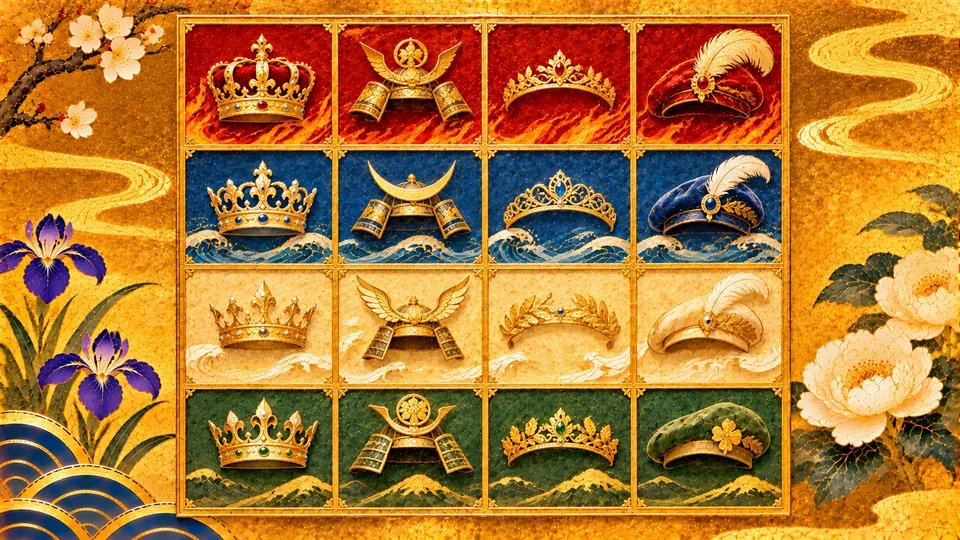
Reading the 16 court cards as a person, as yourself and as a situation
A quick-reference table for the 16 court cards (Page, Knight, Queen, King × four suits), each read in three…
Reading reversed cards: four patterns
A reversed card isn’t necessarily the opposite of the upright. How to read upside-down cards naturally with…
Spreads and the meaning of positions
The classic tarot spreads and what their positions mean: the one-card draw, variations on the three-card…
Framing a question: good questions and ones to avoid
A tarot reading is shaped by its question. The difference between yes-or-no and open questions, and how to…
Reading combinations: story and elemental dignities
How to link several cards into one story, and the basics of elemental dignities, which read cards by how…
A worked reading: a three-card spread from start to finish
Shaping the question, drawing three cards, reading each one, linking them and turning them into advice.…
Reading by theme: love, work, money and relationships
The same card shifts its focus depending on whether you ask about love or work. How to change your point of…
Common doubts, answered
Can you redraw for the same question? What if a scary card comes up? How should you think about whether tarot…
The way to advanced tarot: astrology, Kabbalah, the Thoth deck and your own interpretations
A map for going further: tarot’s correspondences with astrology and the Kabbalah’s Tree of Life, the Thoth…
Feng shui13
Feng shui by the five elements: colors and directions that suit your element
How to use yin-yang and the five elements, the foundation of feng shui, to choose colors, directions and…
What is feng shui? The core ideas
A gentle introduction to the meaning and history of feng shui and its three basics: the flow of qi, yin-yang…
Feng shui by direction: the meaning and luck of the eight directions
What each of the eight directions, north, northeast, east, southeast, south, southwest, west and northwest,…
Feng shui colors and lucky colors
What each color means in feng shui, from yellow, red and green to blue, white, black, pink, purple, gold and…
Feng shui for the entrance: a front door that lets luck in
How to arrange the entrance, which feng shui calls the “mouth of qi”. Where to put shoes, mirrors, lights,…
Feng shui for water areas: toilet, kitchen and bathroom
How to keep the water areas of your home in order, the toilet, kitchen, bathroom and washroom, which feng…
Feng shui and houseplants: which plants and where
Why houseplants are good feng shui, the plants recommended for money, love, work and other kinds of luck,…
How to make morijio, and what it means
The meaning and origin of morijio, the Japanese custom of small cones of salt, how to make them properly…
Feng shui for money: arranging your rooms and your wallet
The room arrangements and habits feng shui says are good for money luck. What “yellow in the west” means, the…
Feng shui for the bedroom: the bed and the pillow
How to arrange the bedroom, the place feng shui says recharges your luck. Where to put the bed and which way…
Feng shui for love: a home that invites good connections
The room arrangements feng shui says are good for love and marriage. The directions of good matches,…
What is kasō? How it differs from feng shui, and reading a floor plan
The meaning and history of kasō, the Japanese art of judging a home’s fortune, how it differs from feng shui,…
Feng shui for the big clean: putting your luck in order at the year’s end
The Japanese year-end big clean, seen through feng shui. What Shōgatsu Kotohajime (December 13) means, the…
Spiritual12

What is the spiritual? Its meaning and a healthy way to enjoy it
What “spiritual” means and how it caught on in Japan, the meaning of words you often hear such as vibration,…
Angel numbers and their meanings
Angel numbers are numbers you keep seeing that are said to carry a meaning. What repeating numbers such as…
Dream reading: what common dreams mean
What common dreams mean in dream reading: teeth falling out, being chased, falling from a height, snakes,…
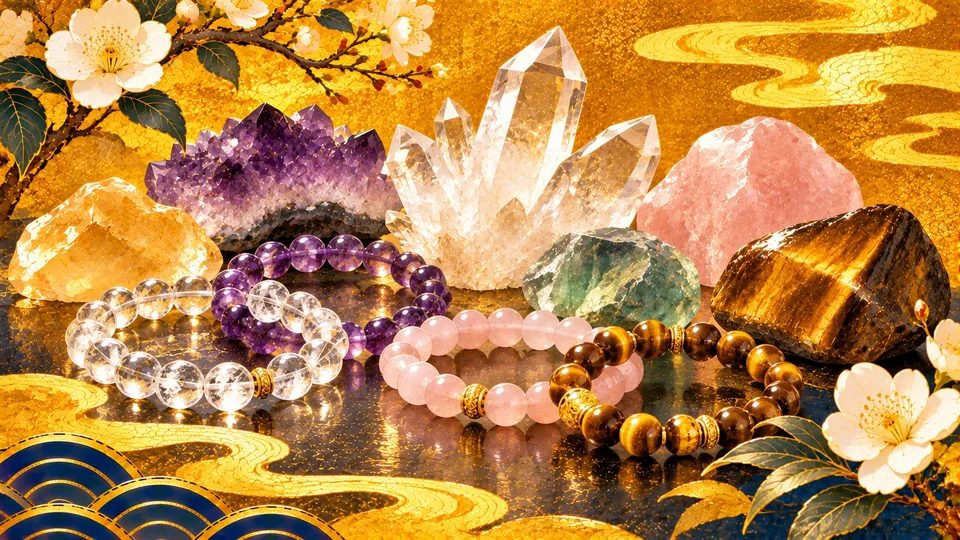
Power stones: meanings and how to choose
The meanings of popular power stones such as clear quartz, amethyst, rose quartz, tiger’s eye and citrine.…
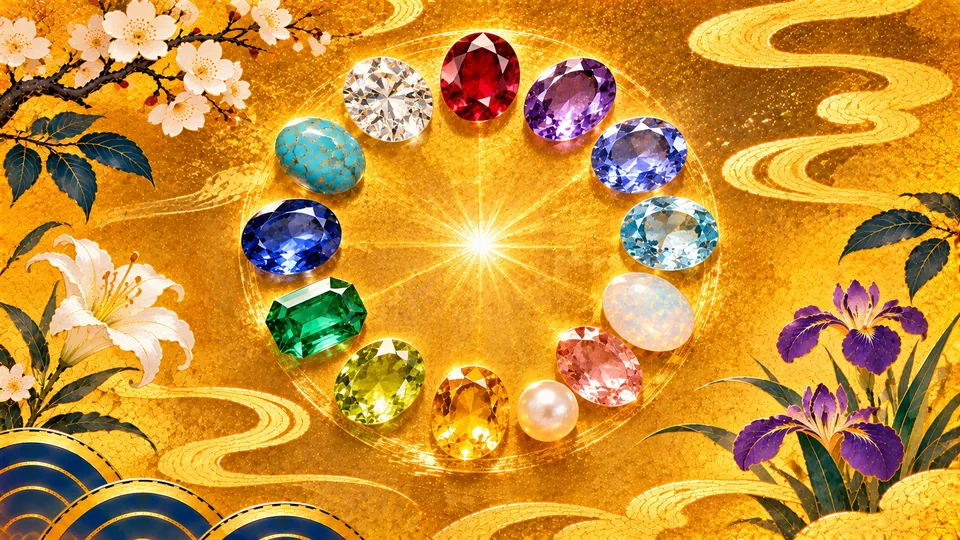
Birthstones by month: the stones and their meanings
Japan’s birthstones month by month, from January’s garnet to December’s tanzanite, with their colors and…
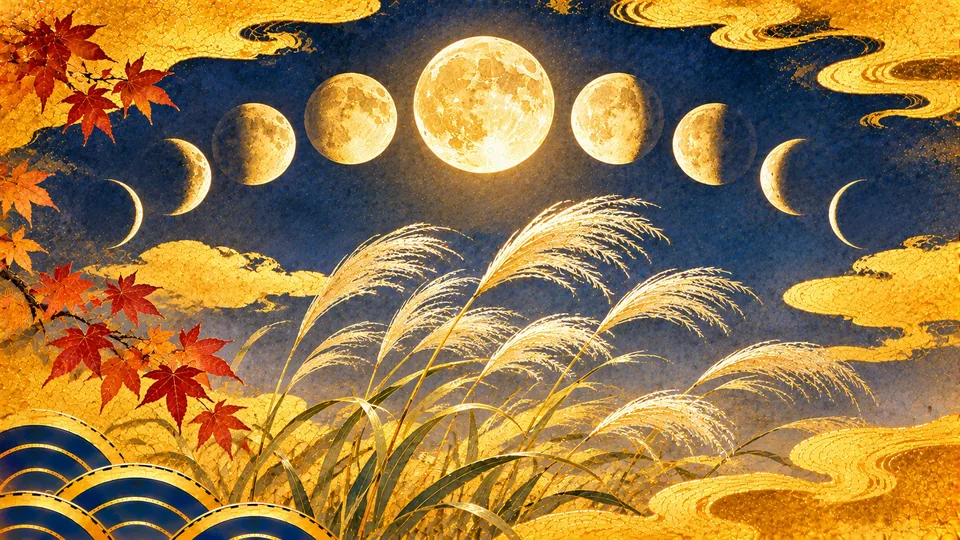
Spending the new moon and full moon, and how to write your wishes
The new moon is a time of beginnings; the full moon a time of harvest and letting go. How to write new moon…
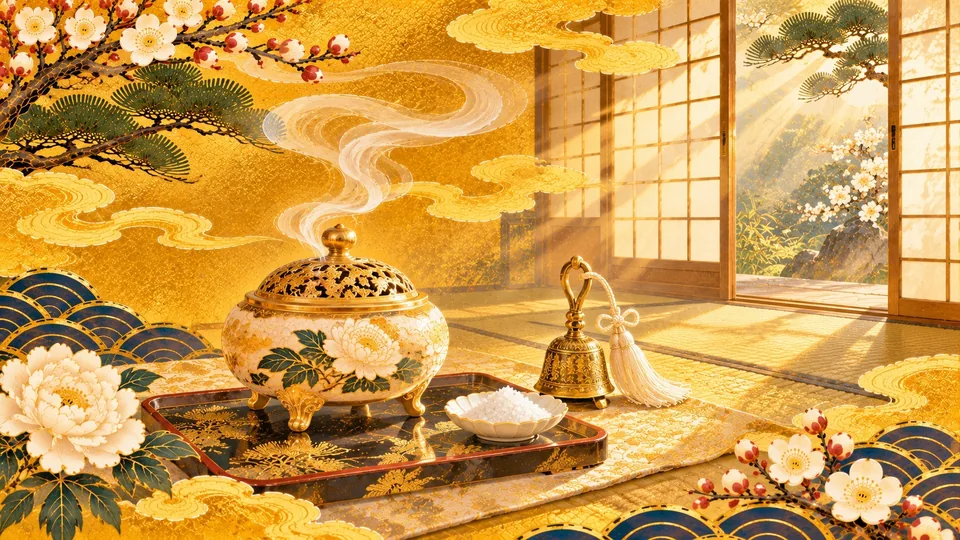
Ways to purify: putting your room and yourself in order
The ways to purify most often recommended in spiritual practice and feng shui: cleaning and airing, salt,…
What is synchronicity? Meaningful coincidences
A gentle guide to synchronicity, the term coined by the psychologist Jung for meaningful coincidence: common…
Power spots and shrine etiquette
What a power spot is, and the proper way to visit a Japanese shrine: passing through the torii, using the…
How to carry and return omamori
What omamori (Japanese protective charms) are and the main kinds, how to carry or place them, whether you can…

What are chakras? The meaning of the seven chakras
What the chakras of Indian yoga are, with a table of the location, color and meaning of the first to the…

Aura colors and their meanings
What the spiritual world means by an aura, and the personality and traits shown by red, orange, yellow,…
Calendar8
How the calendar and the eto fit together
When does the eto year change? How the month eto follow the 24 solar terms, and why the cycle of day eto has…
Directions and the eto
How the twelve branches mark the compass, what the unlucky northeast (kimon, the Ox–Tiger direction) and…
Hours and the eto (the twelve double-hours)
Old Japan told the time with the twelve branches. What time is ushi-mitsu-doki, the witching hour? Where do…
What is Doyō?
Doyō is the roughly 18 days before each of Risshun, Rikka, Risshū and Rittō. How it grew out of the five…
What is rokuyō?
The meaning and lucky hours of the six rokuyō days (Taian, Tomobiki, Senshō, Senbu, Butsumetsu and Shakkō),…
Types of lucky days and what they mean
What the most popular lucky days of the Japanese calendar mean and how they are set: Tenshabi,…
The winter solstice (Tōji)
Tōji, the winter solstice, is the shortest day of the year in the northern hemisphere. Its date and time for…
Senjitsu and the lower almanac notes (rekichū-gedan)
Besides the rokuyō, the Japanese almanac marks many other days by their eto: the senjitsu and the “lower…
Fortune-telling5
What is Nine Star Ki (kyūsei kigaku)?
Nine Star Ki reads fortune and lucky directions from nine stars, from One White Water to Nine Purple Fire.…
Lucky-direction trips in Nine Star Ki (hōi-tori)
The idea behind hōi-tori (or yūki-tori), the Nine Star Ki practice of travelling in a lucky direction, and…
What is Happō-fusagari?
In Nine Star Ki, Happō-fusagari is the year your main star sits in the center of the year chart. Which star…
What is seimei handan (Japanese name divination)?
Seimei handan reads fortune from the number of strokes in the characters of a Japanese name. How to work out…
What is numerology?
Numerology turns your date of birth and name into numbers to read your character and fortune. How to work out…
Astrology4
What is Western astrology?
A simple guide to the basics of Western astrology: the 12 signs, the 10 planets, the 12 houses and aspects,…
What is Indian astrology (Jyotish)?
The basics of Indian astrology, or Jyotish: the sidereal zodiac and how it differs from Western astrology,…
The meaning of the planets in astrology
What each of the ten bodies used in Western astrology means (Sun, Moon, Mercury, Venus, Mars, Jupiter,…
What is Sukuyō astrology?
Sukuyō is the astrology of esoteric Buddhism, said to have been brought to Japan by Kūkai. How to find your…
Basics7
What is eto?
Eto is the 60-step cycle made by pairing the ten heavenly stems with the twelve earthly branches. Why “this…
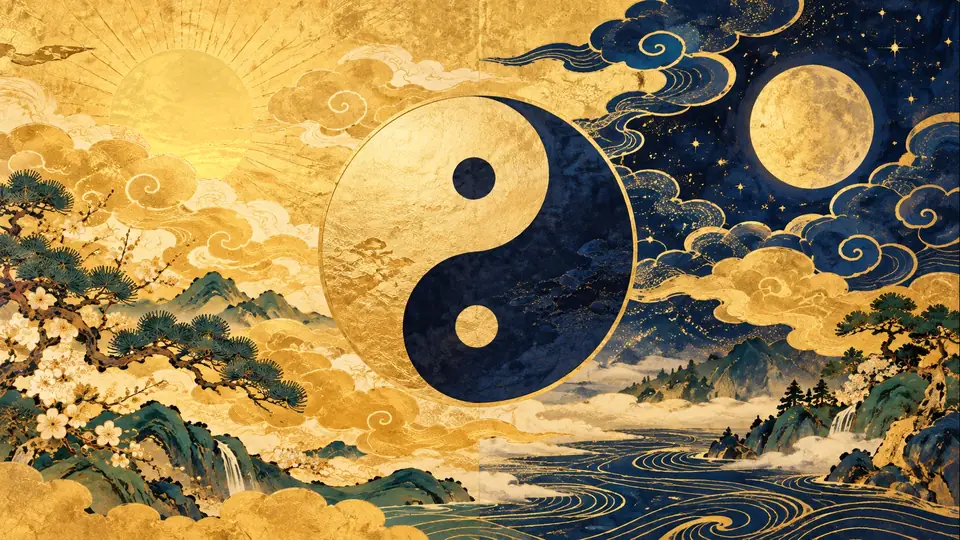
What are yin and yang (in’yō)?
Yin and yang is the ancient Chinese idea that everything is the play of two complementary forces. What the…
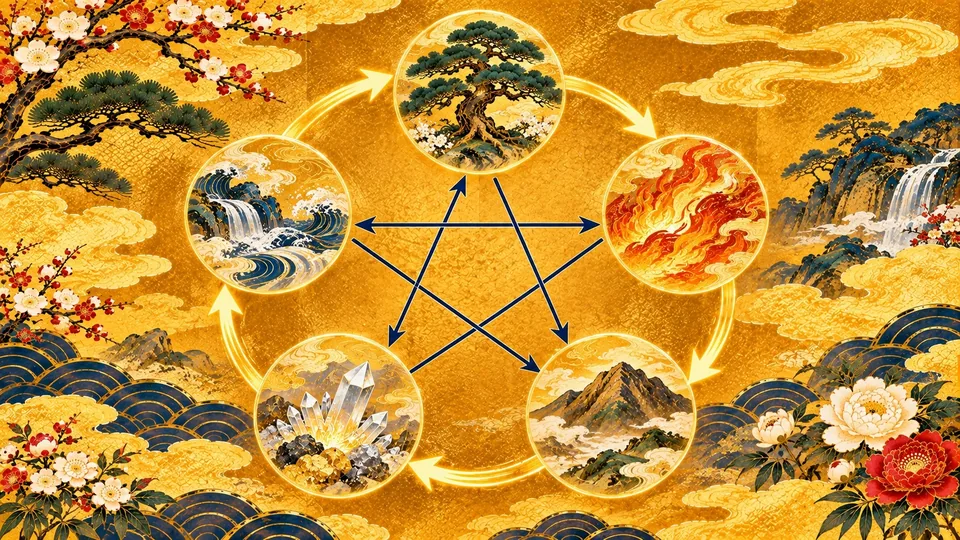
The generating and controlling cycles of the five elements
A diagram-led guide to the two cycles of the five elements: sōjō, in which wood, fire, earth, metal and water…
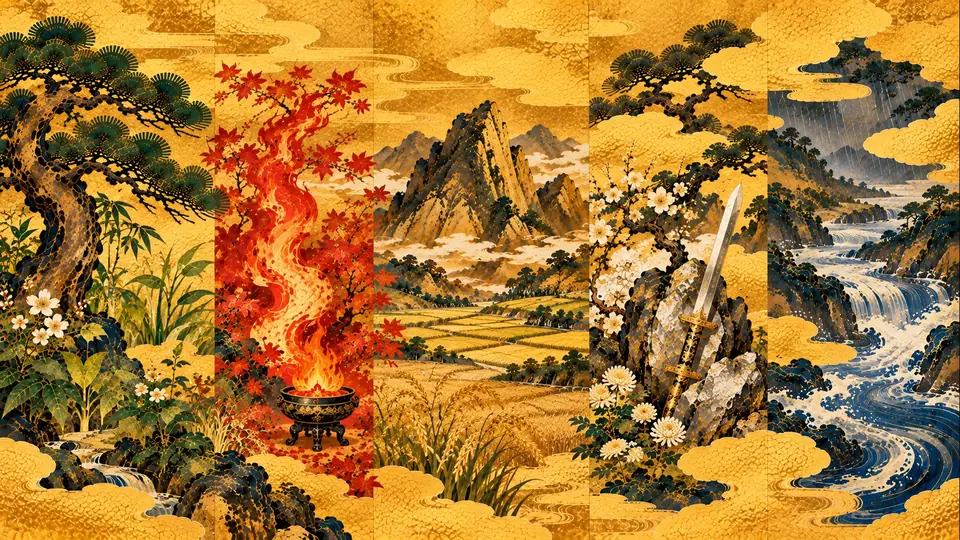
The ten stems (jikkan)
The ten heavenly stems, 甲 乙 丙 丁 戊 己 庚 辛 壬 癸: how they are read in Japanese, what they mean, how they map to…
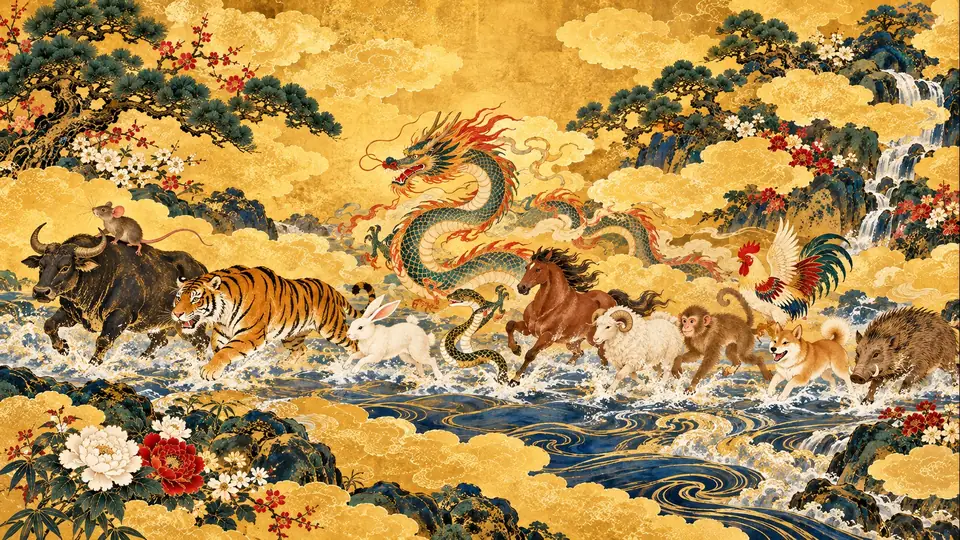
The twelve branches (jūnishi)
The order and Japanese names of the twelve branches, from Rat to Pig, how animals came to be attached to…
The sexagenary cycle and nacchin
A table of all sixty stem-and-branch combinations and the nacchin (納音) element given to each pair, plus why…
Eastern and Western fortune-telling compared
How the eto, Four Pillars and Nine Star Ki differ from Western and Indian astrology: twelve animals that…
Daily life10
Kanreki and the longevity celebrations
Why kanreki is celebrated at 60 and why people wear a red vest, plus the ages and origins of Japan’s…
What is ehō, the lucky direction of the year?
Ehō is the direction where Toshitokujin, the god of the year’s good fortune, lives: the luckiest direction of…
Shichi-go-san age chart and choosing a date
Which birth years celebrate Shichi-go-san (the 7-5-3 festival) in 2026 and 2027, by both kazoe and full age.…
Counting the days for a baby’s first rites, and choosing a date
Enter your baby’s birthday to see the dates of Oshichiya, Omiyamairi, Okuizome and the first sekku, with each…
Lucky days and festival days of the eto
What the lucky and festival days set by the day’s eto mean and how to spend them: Kinoe-ne, Tsuchinoto-mi and…
The five seasonal festivals, the eto and yin-yang
What Japan’s five seasonal festivals (Jinjitsu, Jōshi, Tango, Shichiseki and Chōyō) mean and how they relate…
New Year cards and the eto
Why Japanese New Year cards (nengajō) feature the year’s zodiac animal, the eto of 2027 (丁未, the Yin Fire…
How to display eto ornaments and lucky charms
When to put out the year’s zodiac animal ornaments and clay bells, where to place them, what to do with last…
What is Setsubun?
Setsubun is the day before Risshun, and falls on 2 or 3 February depending on the year. The date and ehō for…
What is Tori-no-ichi?
Tori-no-ichi is a fair held on the Rooster days of November to pray for good fortune and thriving business.…
History2
The history of yin-yang and the five elements
When and how did yin-yang five-element theory begin, and how did it reach Japan? From Zou Yan in ancient…
The Hinoe-uma (Fire Horse) superstition
Where the belief that women born in a Hinoe-uma (Yang Fire Horse) year are hot-tempered came from, how births…
Culture1
Glossary1
GUIDE