Hours and the eto (the twelve double-hours)
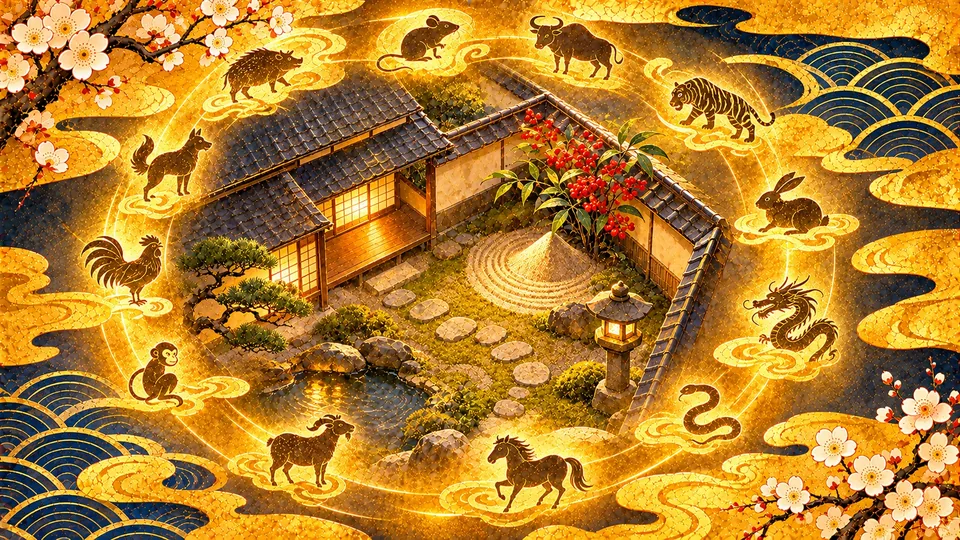
Until the Edo period, Japan divided the day into twelve parts and named each one after a branch. These are the twelve double-hours (jūni-jishin).
On this page
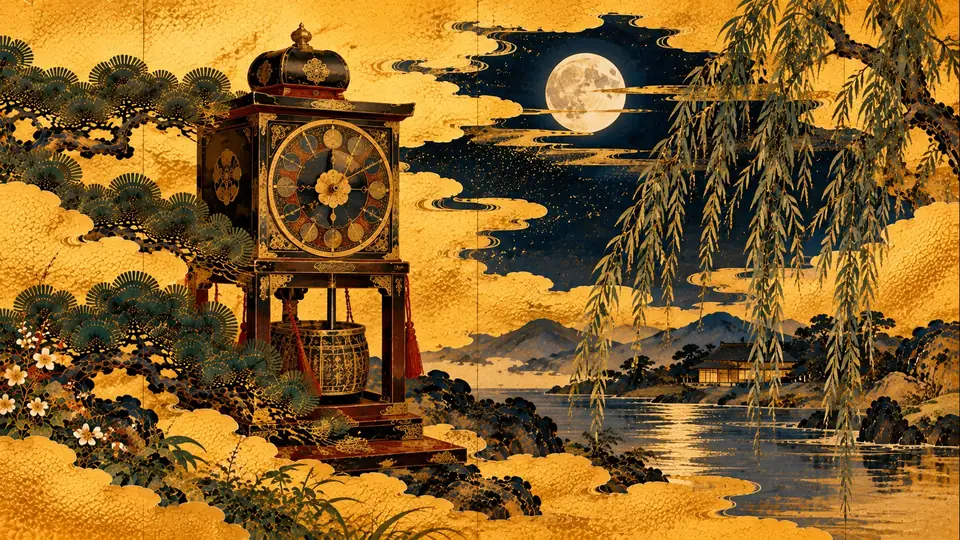
The Edo-period system, however, used seasonal hours: day and night were each split into six between dawn (ake-mutsu) and dusk (kure-mutsu), so an “hour” changed length through the year. The times in the table below are a guide using equal hours. Equal hours were adopted with the calendar reform of 1873.
1.The twelve double-hours
| Hour | Time | Traditional name |
|---|---|---|
| Rat (子) | 23:00–1:00 | Kokonotsu (midnight) |
| Ox (丑) | 1:00–3:00 | Yatsu; Ushi-mitsu |
| Tiger (寅) | 3:00–5:00 | Nanatsu (before dawn) |
| Rabbit (卯) | 5:00–7:00 | Ake-mutsu (dawn) |
| Dragon (辰) | 7:00–9:00 | Itsutsu |
| Snake (巳) | 9:00–11:00 | Yotsu |
| Horse (午) | 11:00–13:00 | Kokonotsu (noon) |
| Goat (未) | 13:00–15:00 | Yatsu (snack time) |
| Monkey (申) | 15:00–17:00 | Nanatsu |
| Rooster (酉) | 17:00–19:00 | Kure-mutsu (sunset) |
| Dog (戌) | 19:00–21:00 | Itsutsu |
| Pig (亥) | 21:00–23:00 | Yotsu |
Times follow equal hours as a guide. The traditional names come from the seasonal hours of the Edo period, so times like dawn and sunset shift through the year.
2.When is ushi-mitsu-doki?
Each double-hour (about two hours) was divided again into four, counted “one, two, three, four”. The third part of the Ox hour (1:00–3:00), roughly 2:00 to 2:30 a.m., is ushi-mitsu-doki. It is the dead of night, “when even the grass and trees sleep”, and the traditional hour for ghosts.
3.Noon, a.m. and p.m.
The exact middle of the Horse hour (11:00–13:00), twelve o’clock, is shōgo, “true Horse”: noon. Before noon is gozen, “before the Horse”, and after noon gogo, “after the Horse”: the Japanese words for a.m. and p.m.
4.Where “oyatsu” comes from
The Edo period also counted the hours with numbers, and the time around the Goat hour in the afternoon was called yatsu, “eight” (about 2 p.m. in seasonal hours, shifting with the season). A snack eaten then is o-yatsu, which is still the everyday Japanese word for an afternoon snack.
5.Four Pillars and the hour pillar
In Four Pillars, the eto of your hour of birth is the “hour pillar”, said to show your later years and your bond with your children. Add your birth time in the birth chart reading to see it.
Now try a reading for yourself
Free readings related to this article.
Read next