How to display eto ornaments and lucky charms
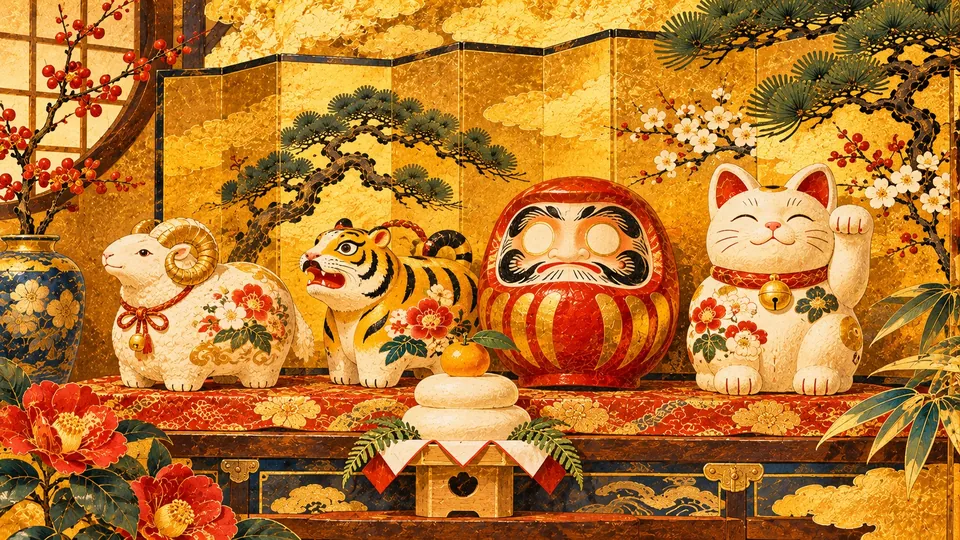
As the year draws to a close, shrines and shops in Japan fill with ornaments of next year’s zodiac animal: clay bells (dorei), papier-mâché, ceramic and carved wood, in every shape and material. There are no strict rules, but here are the traditional guidelines.
On this page
1.When to put them out, and for how long
- Putting them out: usually any time in December, and by New Year’s Eve at the latest. Some families start preparing on 13 December, shōgatsu kotohajime, the traditional start of New Year preparations. As with other New Year decorations, some avoid the 29th (ni-jū-ku can sound like “double suffering”) and the 31st (“one-night decorating”).
- How long: you can leave it out all year. Some families display it only over New Year and put it away after matsu-no-uchi (around 7 January, or the 15th in some areas).
- When the eto changes: in Nine Star Ki and Four Pillars the eto changes at Risshun, but ornaments are part of getting ready for the New Year, so they usually go out in time for 1 January.
2.Where to place them
- The entrance: a favourite spot for welcoming good fortune. Choose a clean place a little above eye level, such as the top of the shoe cabinet.
- The living room: where the family gathers, it is said to protect the household all year.
- Near a household shrine or alcove: if you have one, some families place it there.
Direction doesn’t matter either. If it is on your mind, face it toward the year’s ehō, or south or east. Avoid putting it straight on the floor, and dust it often.
3.What to do with last year’s ornament
- Keep collecting: many people enjoy completing a set of twelve, so it is fine to leave them all out.
- Store it: the same animal returns in twelve years, so you can keep it in its box.
- Ritual burning: charms from a shrine or temple can go to the dondo-yaki (sagichō) bonfire at Little New Year, or to the shrine’s box for returning old charms. Check first, as not every shrine accepts them.
- Throwing it away: you can purify it with salt, wrap it in paper and put it out according to your local rules.
4.Arranging with other lucky charms
They can go alongside maneki-neko beckoning cats, daruma, Fukusuke or the Seven Lucky Gods. With a daruma, the custom is to paint in one eye (the one on your right as you face it) when you make a wish, and the other when the wish comes true (the details differ between regions and temples).
5.Choosing one
- Material: unglazed clay bells make a simple, rustic sound when shaken and are said to ward off evil. Papier-mâché is light, and carved wood is sturdy and fits anywhere.
- Size: something small enough to sit in your palm is easy to place.
- Makers: every region has its own traditional folk toys of the zodiac animals. Choosing one on a trip or at a shrine is a lovely way to remember the year.
See next year’s eto for the coming year, and the twelve animals for what each one means. A shop for eto ornaments and traditional crafts is also on the way.
Now try a reading for yourself
Free readings related to this article.
Read next