Reading the 16 court cards as a person, as yourself and as a situation
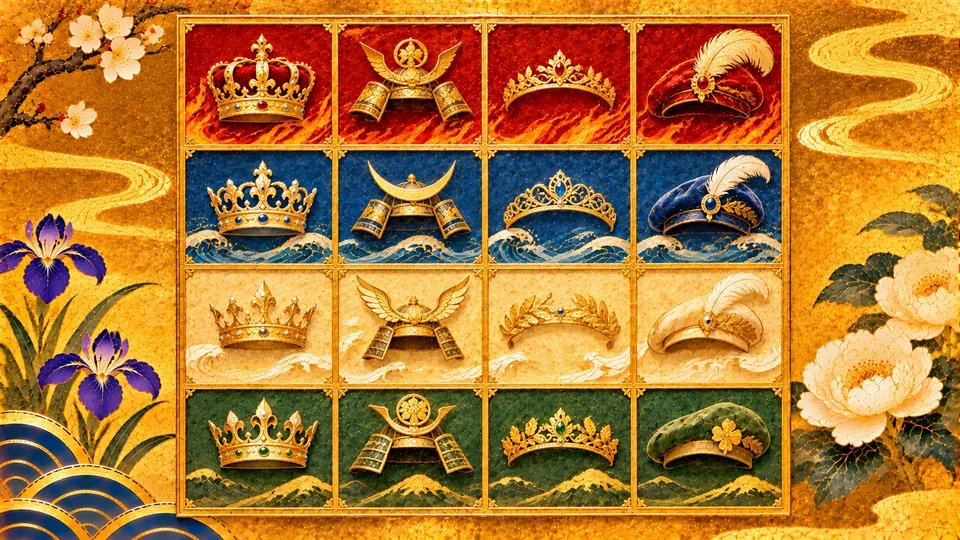
This is a quick-reference table applying the “three ways of reading” from the last lesson to all sixteen court cards. Using each rank’s role and each suit’s element as clues, learn every card in three lines: “a person”, “a side of yourself” and “a situation”.
On this page
(Elementary · about 6 minutes to read)
“I freeze when a court card comes up” is something we hear very often. One reason is that each card has three faces: someone else, yourself, and an event. In this lesson, each of the sixteen cards has its three faces set out in a phrase each. You don’t need to memorise them all. Start by browsing the suit you draw most, and look up the rest like a dictionary when you need them. The wording is based on meanings widely shared for the Waite deck.
1.First, the role of each rank
- Page = the one who learns and the one who delivers. Newly in touch with something; news and invitations.
- Knight = the one who moves and carries. Momentum towards a goal; overdone, haste or stubbornness.
- Queen = the one who nurtures and receives. Deepens the suit’s power inside and supports others.
- King = the one who governs and decides. Turns the suit’s power outward and judges with responsibility.
2.A guide to the three readings
Read a card as a person in questions involving others, such as love, family or work, when it falls in a “the other person” or “people around you” position. Read it as a side of yourself in an “advice” or “your attitude” position, or in a question about yourself. Read it as a situation in an “how things unfold” or “near future” position, or when fitting a person to it doesn’t feel right. If unsure, say all three out loud and choose the sentence that best answers the question.
3.The Wands (fire) court
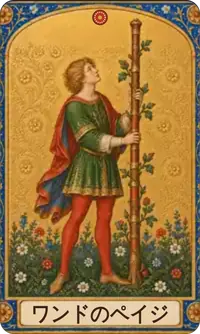
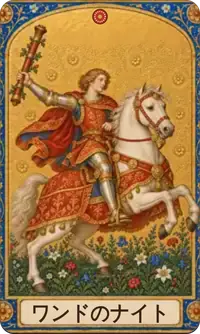
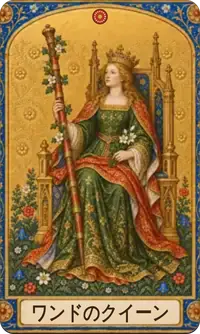
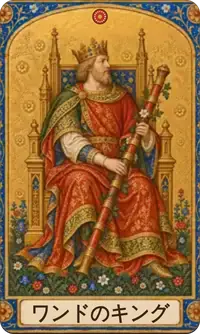
The Page, Knight, Queen and King of Wands. Four stages of passion, drive and challenge.
4.Wands at a glance
- Page — Person: a curious soul who brings new ideas. / Yourself: the seed of “I want to try that”. / Situation: exciting news, the start of a project.
- Knight — Person: passionate and quick to act, a little fickle. / Yourself: the part of you that wants to leap off on impulse. / Situation: sudden developments, travel or moving house, speed.
- Queen — Person: bright and confident, lifts everyone’s spirits. / Yourself: the power to show who you are with pride. / Situation: attention gathers; a time when popularity and charm come into play.
- King — Person: a leader who talks about a vision and pulls people along. / Yourself: the power to draw the big picture and decide. / Situation: taking the initiative, launching a business or plan.
5.The Cups (water) court
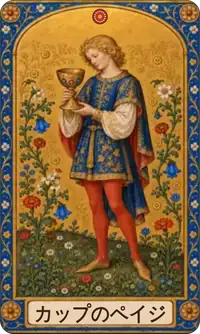
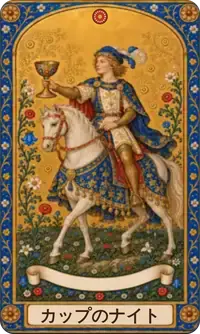
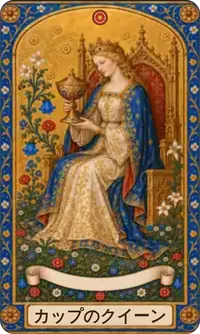
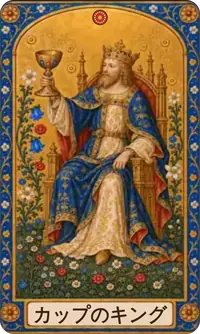
The Page, Knight, Queen and King of Cups. Four stages of feeling, empathy and imagination.
6.Cups at a glance
- Page — Person: sensitive, shows honest feelings. / Yourself: the wish to treasure what moved you. / Situation: a happy invitation or a heartfelt message.
- Knight — Person: romantic, follows the heart. / Yourself: the wish to chase an ideal. / Situation: an offer or proposal arrives; feelings begin to move.
- Queen — Person: highly empathetic, listens properly. / Yourself: the power to trust your intuition and accept your feelings. / Situation: a moment that needs kindness; a time to settle your heart.
- King — Person: calm and big-hearted, not swept away by emotion. / Yourself: the power to value feelings while responding coolly. / Situation: an emotional problem settling down.
7.The Swords (air) court
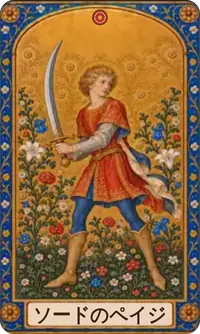
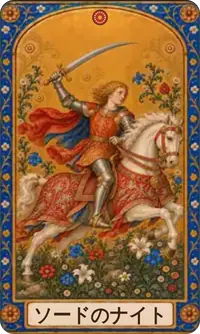
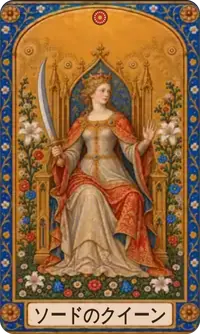
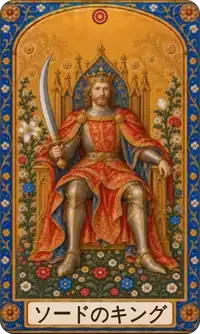
The Page, Knight, Queen and King of Swords. Four stages of thought, words and judgment.
8.Swords at a glance
- Page — Person: sharp-eyed, alert to information. / Yourself: the wish to research and watch closely. / Situation: information comes in; rumors, or something that needs checking.
- Knight — Person: quick-witted and outspoken. / Yourself: the part of you that rushes to conclusions and wants to win the argument. / Situation: things move all at once; sudden changes or debate.
- Queen — Person: frank and fair, with independent views. / Yourself: the power to cut through vagueness and draw boundaries. / Situation: a time to make facts clear, to sort things out and decide.
- King — Person: logical and principled; an expert or someone in a position to judge. / Yourself: the power to separate feelings from facts. / Situation: contracts, rules, a moment that calls for fair judgment.
9.The Pentacles (earth) court
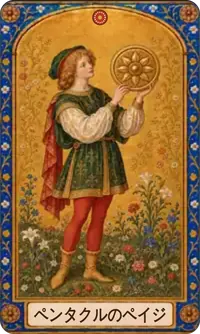
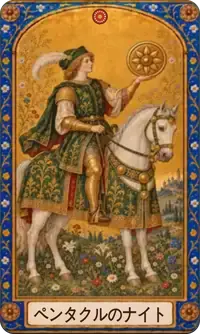
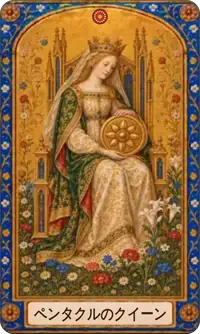
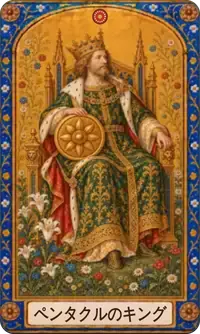
The Page, Knight, Queen and King of Pentacles. Four stages of reality, work and plenty.
10.Pentacles at a glance
- Page — Person: a diligent student or newcomer. / Yourself: the wish to learn steadily from the basics. / Situation: a new chance to study or work; concrete news.
- Knight — Person: careful and sincere, keeps promises. / Yourself: the patience to keep going; sometimes too cautious. / Situation: slow but sure progress; a time to follow the steps.
- Queen — Person: caring, makes daily life comfortable. / Yourself: the power to look after yourself and others in practical ways. / Situation: a time to put home and daily life in order and enjoy everyday plenty.
- King — Person: experienced, dependable and financially secure. / Yourself: the power to take responsibility and turn results into something solid. / Situation: foundations firm up at work or with money; a phase of stability.
11.Trying it out
Say you ask “Will I fit in at my new workplace?” and draw the Queen of Swords. As a person: “a fair, outspoken senior colleague is the key”. As a side of yourself: “don’t hold back too much; ask frankly about what you don’t understand”. As a situation: “at first, it’s a time to get the rules of the work straight rather than the relationships”. One card gives three readings. Here the subject of the question is “I”, so reading it as a side of yourself is probably the most useful first; the other two can be added as extras.
12.Reversed court cards
When a court card comes up reversed, its three faces stay the same. Then ask whether its qualities are “weakened” or “overdone”, and it becomes easier to read. The King of Wands reversed: leadership spinning its wheels, or becoming too pushy. The Queen of Cups reversed: worn out from taking in too much of other people’s feelings. Rather than blaming the person’s character, look at how to set it right.
13.Common mistakes
- Deciding King = older man and Queen = woman. Read by behavior, not by sex or age.
- Reading every court card as a prophecy that “someone will appear”. They often show a side of yourself or a situation.
- Giving up after trying to memorise all sixteen. You can build them on the spot by multiplying the rank’s role by the suit’s element.
Back to: The court cards: how to read the sixteen figures
14.Practice
Keep doing a one-card draw in the tarot reading for a few days until a court card comes up. When one does, write your own three sentences, “person, yourself, situation”, before looking at the table, then compare. Mark the sentence that spoke most to you that day, and your own habits of reading will start to show.
15.Quiz
Q1. A court card falls in the “advice” position. How is it most natural to read it first?
- A new person who is bound to appear
- A side of yourself, an attitude worth adopting
- A fate you can’t change
Answer: A side of yourself. In the advice position, the basic reading is the card’s figure as “an attitude worth adopting now”.
Q2. Read the Knight of Pentacles as a situation.
- Slow but sure progress; a time to follow the steps
- Sudden changes and heated debate
- A romantic proposal
Answer: Slow but sure progress. The Knight’s drive to move forward, multiplied by the steadiness of Pentacles (earth), gives a steady unfolding.
Q3. What is a fitting reading of the Queen of Cups reversed?
- Declaring her a cold, uncaring person
- A certain heartbreak
- Worn out from taking in too much of others’ feelings
Answer: Worn out from taking in too much. A reversed court card is read as its qualities weakened or overdone. Rather than blaming character, think how to set it right.
16.Draw a card
Yorozu Goyomi’s tarot reading lets you do a one-card draw, a three-card spread, an either-or reading and the Celtic Cross, free and with no sign-up. Look up the meanings of all 78 cards in the tarot card encyclopedia.
Now try a reading for yourself
Free readings related to this article.
Read next