Power spots and shrine etiquette
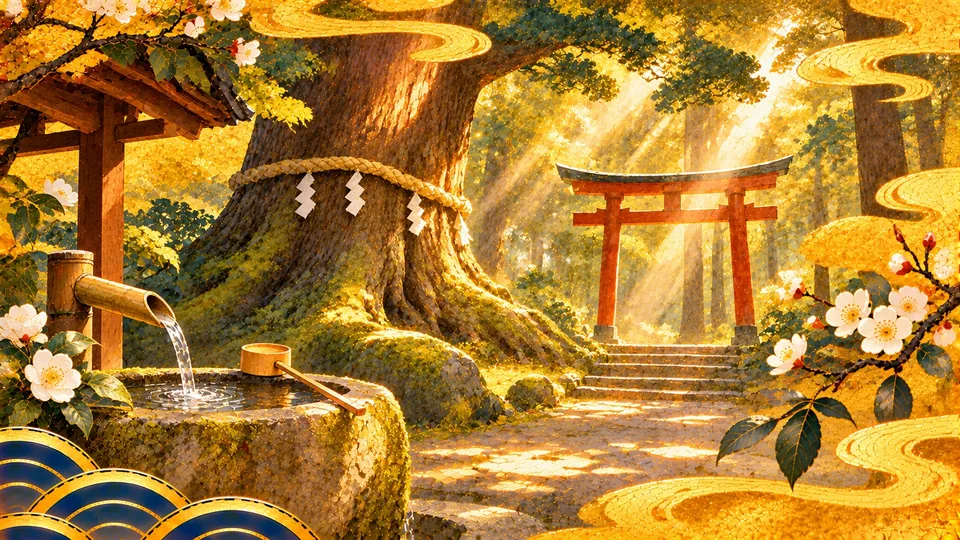
A power spot is a place where you feel energised or cleansed in spirit when you visit. Many are places people have long held sacred, such as shrines, temples, mountains, waterfalls and giant trees.
On this page
1.Enjoying power spots
- Learn the story: looking up the deity enshrined and the history of the place before you go makes the visit much richer.
- Feel the nature: savor the trees of the grounds, the sound of water and the clearness of the air.
- Mind your manners: shrines and temples are places of worship. Follow the rules on photos and where you may go, and pray quietly.
2.Guardian buddhas of the twelve animals
In Buddhism, each birth-year animal is said to have a buddha who protects it (mamori honzon). Use it as a guide for visiting temples.
| Birth year | Guardian buddha |
|---|---|
| Rat | Senju Kannon (Thousand-armed Kannon) |
| Ox, Tiger | Kokūzō Bosatsu |
| Rabbit | Monju Bosatsu |
| Dragon, Snake | Fugen Bosatsu |
| Horse | Seishi Bosatsu |
| Goat, Monkey | Dainichi Nyorai |
| Rooster | Fudō Myōō |
| Dog, Pig | Amida Nyorai |
Check your birth year’s eto in the birth chart reading or the eto by year list (in divination, the year changes at Risshun).
3.Choosing a kind of place by element or Nine Star Ki
You can also enjoy choosing the kind of place to visit by your element (found from your Nine Star Ki main star or day stem). This is one way of thinking about it.
| Element | Main star | Places said to suit |
|---|---|---|
| Wood | Three Jade Wood, Four Green Wood | Forests, sacred giant trees, bamboo groves, famous flower spots |
| Fire | Nine Purple Fire | Famous sunrise and sunset spots, shrines and temples with fire festivals, bright open summits |
| Earth | Two Black Earth, Five Yellow Earth, Eight White Earth | Mountains, ancient burial mounds, farmland, shrines to earth deities |
| Metal | Six White Metal, Seven Red Metal | Rocky mountains, sacred rocks (iwakura), shrines linked to mines or metal |
| Water | One White Water | Waterfalls, lakes, springs, seaside shrines |
You can also check your element in the chart in feng shui by the five elements. If the direction you travel in matters to you, see the Nine Star Ki reading and lucky directions.
4.Well-known power spots by region
All of these have drawn worshippers since long ago. Enjoy their blessings as things they are “known for” or “said to bring”.
| Region | Place | Known for |
|---|---|---|
| Tōhoku | Dewa Sanzan (Yamagata) | Mountains of ascetic practice; the three-mountain pilgrimage is seen as a journey of rebirth |
| Kantō | Meiji Jingū (Tokyo) | A great forest in the heart of the city; the Kiyomasa well spring in its grounds |
| Kantō | Kashima Jingū and Katori Jingū (Ibaraki, Chiba) | Ancient shrines to warrior gods; forest approach paths |
| Chūbu | Fujisan Hongū Sengen Taisha (Shizuoka) | Head shrine of the Sengen shrines, with Mount Fuji as its sacred mountain |
| Chūbu | Togakushi Jinja (Nagano) | An avenue of cedars and the gods of the mountain |
| Kinki | Ise Jingū (Mie) | The heart of Japan’s shrines, with Amaterasu enshrined in the Inner Shrine |
| Kinki | Kumano Sanzan (Wakayama) | The Kumano Kodō trails and Nachi Falls; seen as a land of rebirth |
| Kinki | Fushimi Inari Taisha (Kyoto) | The thousand torii; head shrine of the Inari shrines, known for business success |
| Chūgoku | Izumo Taisha (Shimane) | Known for matchmaking; the gods gather here in the tenth lunar month |
| Chūgoku | Itsukushima Jinja (Hiroshima) | Shrine buildings that seem to float on the sea |
| Shikoku | Kotohiragū (Kagawa) | A long flight of stone steps; known as the god of safety at sea |
| Kyūshū | Usa Jingū (Ōita) | Head shrine of all the Hachiman shrines |
| Kyūshū | The forests of Yakushima (Kagoshima) | Forests of giant trees such as the Jōmon Sugi cedar |
5.How to visit a shrine
1. Pass through the torii
Bow lightly in front of the torii gate before passing through. The middle of the approach is said to be the path of the gods (seichū), so it is best to walk a little to one side.
2. Purify yourself at the basin
- Take the ladle in your right hand and rinse your left hand
- Switch to your left hand and rinse your right hand
- Switch back to your right hand, pour water into your left palm and rinse your mouth
- Rinse your left hand once more
- Tilt the ladle upright so the water runs down the handle, and put it back
3. Worship: two bows, two claps, one bow
- Ring the bell if there is one, and quietly drop in your offering
- Bow deeply twice
- Put your hands together in front of your chest, slide your right hand down a little, and clap twice
- Bring your hands together and pray (first give thanks for everyday life; some people also say their name and address silently)
- Bow deeply once
4. On leaving
After you pass back through the torii, turn and bow once.
6.How temples differ
At a temple you don’t clap; you put your palms together and bow. Step over the threshold of the temple gate rather than on it, and offer incense or a candle if they are there.
7.Goshuin
A goshuin is a seal and inscription you receive as a record of your visit. Ask for it at the counter after you have prayed. It isn’t a stamp rally, so wait quietly while it is written.
8.Good days to visit
You can visit any time, but many people choose the 1st and 15th of each month (tsuitachi-mairi and jūgonichi-mairi), or lucky days such as Tenshabi and Ichiryū-manbai-bi. See the kinds of lucky days for their meanings and the lucky day calendar for dates. For looking after your omamori, see how to carry and return omamori.
9.FAQ
Do you bow twice, clap twice and bow once at a temple too?
At a temple you don’t clap; the usual way is to put your palms together quietly and bow. Two bows, two claps and one bow is shrine etiquette.
How much should I offer?
There is no set amount. A well-known pun is the 5-yen coin (go-en), which sounds like “a good connection”, but what matters most is the gratitude you put into it.
I heard some shrines use four claps.
Some shrines have their own way of worship. Izumo Taisha, Usa Jingū and Yahiko Jinja use two bows, four claps and one bow, and the priests of Ise Jingū use a special form of eight bows and eight claps. Follow the guidance of the shrine you visit.
Now try a reading for yourself
Free readings related to this article.
Read next