What is feng shui? The core ideas

Feng shui (fūsui in Japanese) is an idea born in China: by arranging your land and home well, you take in good qi (ki) and make your life richer. This article gently introduces what feng shui means, where it comes from, and three basics worth knowing.
On this page
1.What the word means
The word “feng shui”, literally “wind and water”, is said to come from a line in the Book of Burial, attributed to Guo Pu of the Eastern Jin dynasty: “Qi scatters when it rides the wind, and stops when it meets water.” Qi blown by the wind disperses, and qi that runs into water stays. So the best land is a place that shelters from the wind and has water.
It began as a technique for choosing the sites of capitals and tombs, reading the line of the mountains (the “dragon veins”) and the course of rivers to judge whether land was good. In Japan, later writers explained that the Heian capital, Kyoto, fits the ideal of shijin sōō, “matched to the four guardian beasts”: mountains to the north, a river to the east, a great road to the west and a pond or plain to the south.
2.Basic 1: the flow of qi
In feng shui, qi is something like an invisible energy. The ideal is for good qi (seiki, “living qi”) to flow in without stagnating and to circulate through the home.
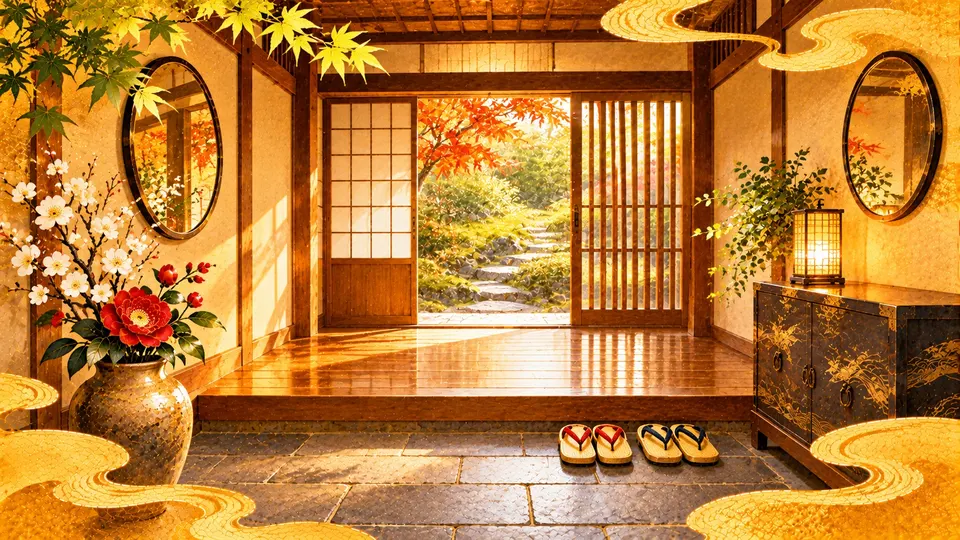
- The front door is where qi comes in, so keep it bright and clean.
- Too many things stop qi from flowing, so tidy up.
- Open the windows and let fresh air in.
These basics also make good sense simply as habits for living comfortably.
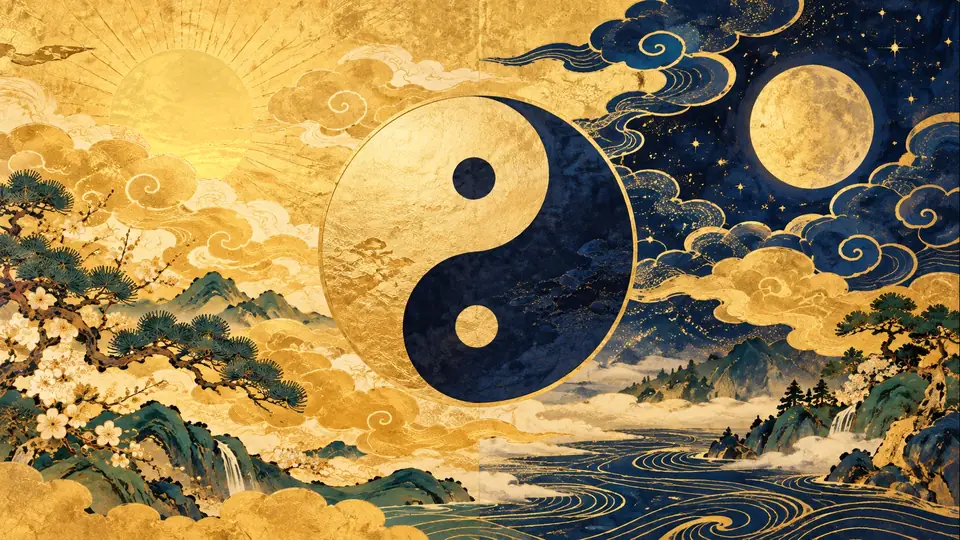
3.Basic 2: yin-yang and the five elements
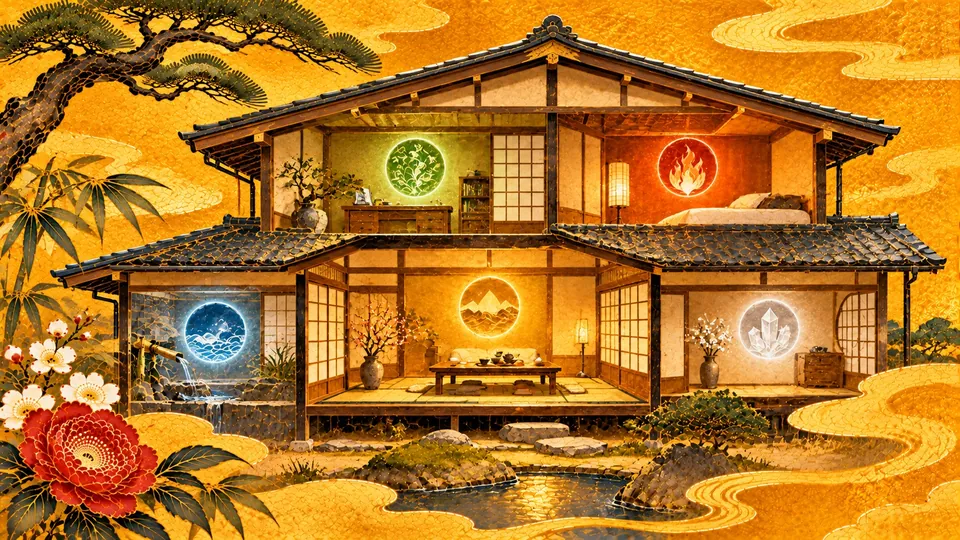
Feng shui rests on yin-yang and the five elements. It sees all things in terms of yin and yang and the five elements of Wood, Fire, Earth, Metal and Water, and its aim is to balance them.
| Element | Direction | Colors | Materials and objects |
|---|---|---|---|
| Wood | East, southeast | Green, blue | Houseplants, wooden furniture |
| Fire | South | Red, purple | Lights, candles |
| Earth | Center, southwest, northeast | Yellow, brown, beige | Pottery, ceramics |
| Metal | West, northwest | White, gold, silver | Metal objects, clocks |
| Water | North | Black, navy | Aquariums, glass |
How the elements “help” and “cancel” each other is explained in the generating and controlling cycles. Ways to arrange a room with the five elements are in feng shui by the five elements.
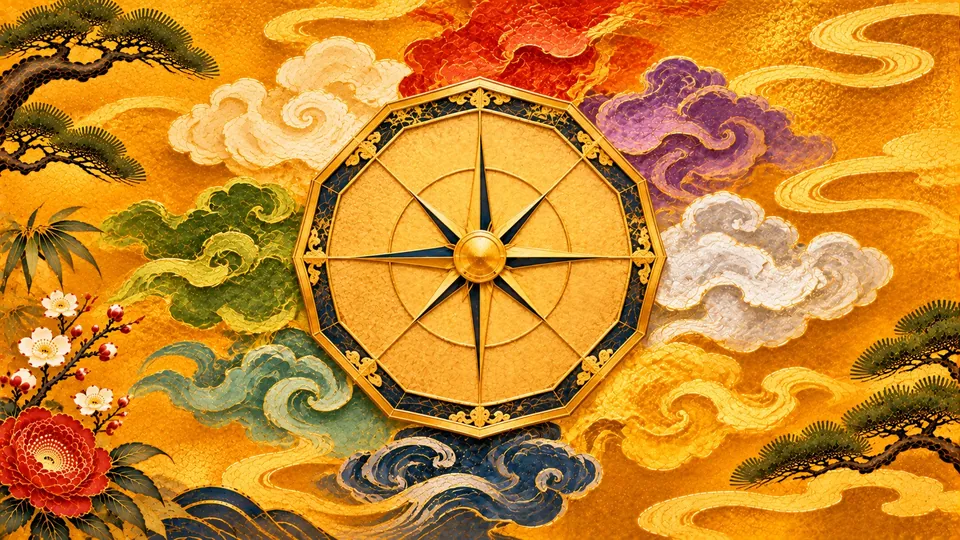
4.Basic 3: the eight directions
Seen from the center of the home, each of the eight directions, north, northeast, east, southeast, south, southwest, west and northwest, has its own meaning and area of luck. East is work and growth, west is money and enjoyment, north is trust and savings, and so on. The meaning of each direction is set out in feng shui by direction.
The twelve animals are used for directions too. For the “demon gate” in the northeast and the “rear demon gate” in the southwest, see directions and the eto.
5.The main schools
Feng shui falls broadly into the Form school (rantō), which reads the shapes of mountains and rivers, and the Compass school (riki), which calculates good and bad from directions, time, year of birth and so on. Within the Compass school there are many branches, such as Eight Mansions and Flying Stars, and the advice for the same room can differ between schools.
Much of what is known as “feng shui” in Japan mixes this Chinese feng shui with kasō, Nine Star Ki and ideas about color, adapted to make it easy to live with.
6.How to start today
- Clean and tidy: first cut down on things you don’t need and dust. It is the one basic every school agrees on.
- Sort out the entrance: don’t leave shoes out, and keep it bright. → Feng shui for the entrance
- Keep the water areas clean: clean the toilet, kitchen and bathroom often. → Feng shui for kitchens and bathrooms
- Bring in plants: lively greenery is said to settle qi. → Feng shui and houseplants
Feng shui is not a matter of “do this or be unhappy”. It is best enjoyed as a set of hints for making your home a pleasant place. If you want to know each person’s lucky directions by Nine Star Ki, see the Nine Star Ki reading too.
7.FAQ
How is feng shui different from kasō?
Both look at the link between home and fortune. Feng shui is the Chinese way of reading a whole site and its surroundings, while kasō is said to have grown out of it in Japan and specialised in the floor plan and directions of a house. Kasō also has ideas of its own, such as the great weight given to the demon gate and the rear demon gate.
Is feng shui scientifically proven?
Feng shui is a traditional philosophy and custom, and its effects have not been proven by science. Still, much of it is useful everyday wisdom, such as the fact that a bright, airy, tidy room is pleasant to live in.
Now try a reading for yourself
Free readings related to this article.
Read next